

Interactive Tech Journalism
Issue 10 โ€ข June 2026
๐Ÿ‘‹

Welcome to DevTech News

If you subscribe to the site, then you may have caught last month's absence of the usual notification email. I ended up publishing issue 9 later than usual and decided to skip sending the email altogether. Having said that, if you missed the issue because you didn't stop by on your own, you can catch it in the archives (just scroll up a tiny bit for the link). But we're in June now, and there's a whole new lineup of stories, stats, and tools waiting for you below. The Tools and Resources section also features one of my own creations, which I built recently to speed up my image-editing workflow. Perhaps it'll help you, too. Enjoy the read!

Below are the headline stories for June 2026:

Featured Stories

๐Ÿ’ป

DevTech

๐Ÿ’ป

State of AI 2026: Developers Double Down on AI-Generated Code as Claude Dominates Coding Agents

AI-generated code adoption has doubled in a single year, jumping from 28% to 54% according to the State of AI 2026 survey of 7,258 developers. The rapid shift signals that AI-assisted coding has moved from early-adopter experiment to standard practice, with Claude Code emerging as the clear winner among coding agents at 42.3% positive sentiment, significantly outpacing GitHub Copilot and OpenAI Codex. Despite ChatGPT's broader popularity, Claude has become the model that developers actually pay for most, with personal spending on AI tools increasing notably across the board.

However, the enthusiasm comes with mounting concerns as developers overwhelmingly believe we're experiencing an "AI bubble," rating their agreement at 2.9 out of 5 on average. Hallucinations and inaccuracies remain the top pain point with nearly 4,000 mentions, followed by code quality issues, revealing persistent reliability challenges despite the adoption surge.

Read Full Survey

Quick Hits

A developer built an AI agent pipeline that transforms voice notes into published articles across multiple platforms. The system handles transcription, writing, multi-round reviews, and automated publishing while the human only records thoughts, reviews drafts, and approves final publication.

Read Article

Fed up with AI coding agents, developer Johannes Link sneaked a prompt injection into his Java testing app that instructed AI tools to delete all tests and code. The sabotage instruction was hidden from human reviewers, and sparked controversy about the ethics of weaponizing open source software against AI users.

Read Article
๐Ÿค–

AI

๐Ÿค–

AI Helps Chemists Design Molecules Step by Step

Researchers at EPFL have developed Synthegy, a breakthrough framework that uses large language models as reasoning engines for chemistry. Instead of generating chemical structures directly, the AI evaluates and guides traditional computational tools using natural language instructions. When a chemist requests "early formation of a specific ring" or asks to "avoid unnecessary protecting groups," Synthegy translates routes into text, analyzes them, and explains its reasoning โ€” allowing researchers to rank pathways efficiently.

The technology represents a shift from "vibe coding" in software to "vibe chemistry" in molecular design. In double-blind studies with 36 chemists providing 368 evaluations, expert judgments aligned with Synthegy's assessments 71.2% of the time. The system bridges synthesis planning and reaction mechanisms through a unified natural language interface, potentially accelerating drug discovery and making advanced computational tools more accessible. As researcher Andres Bran notes: "We're giving chemists the power to just talk, allowing them to iterate much faster."

Read Full Article

Quick Hits

Following recent tragedies where AI companies flagged users for concerning content but didn't warn authorities, legal scholars are exploring whether platforms should have a 'duty to warn.' The proposed framework would require AI companies to alert law enforcement when human reviewers confirm credible threats, similar to the legal obligations therapists face under the Tarasoff doctrine.

Read Article

Technical writing sites are seeing massive traffic drops as AI tools embedded in IDEs answer developer questions that previously required human-written documentation. Geoff Graham argues the solution is focusing on real-life experiences and edge cases that AI can't easily replicate, rather than basic documentation that's now obsolete.

Read Article
๐Ÿ›ก๏ธ

CyberSec

๐Ÿ›ก๏ธ

Cybercriminals Target AI Coding Tool Adoption with SEO Poisoning Campaign

Financially motivated eCrime actors are exploiting the rapid adoption of AI coding assistants through a SEO poisoning campaign that targets Windows developer workstations. The operation uses fake domains mimicking legitimate AI tool installers, tricking victims into executing malicious PowerShell commands that deploy fileless infostealers directly into system memory.

Security researchers at EclecticIQ have traced the malicious infrastructure to bulletproof hosting providers in the Netherlands, revealing a coordinated effort using typosquatted domains and encrypted exfiltration channels. The malware steals credentials, session cookies, VPN keys, and sensitive files before transmitting encrypted data to command-and-control servers.

Read Full Article

Quick Hits

Security researchers have discovered ChatGPhish, a vulnerability that exploits ChatGPT's trust in Markdown to render phishing content in its interface.

Read Article

A malicious npm package called codexui-android with 27,000 weekly downloads was caught stealing OpenAI refresh tokens from developers. The attackers built a genuinely useful tool to establish credibility before weaponizing it, hiding malicious code only in the published package while keeping the GitHub repository clean.

Read Article
๐Ÿน

BioTech

๐Ÿฉป

Chinese Scientists Build Handheld Cancer Detector with 94.9% Accuracy in Trials

Researchers at Westlake University in China have developed a handheld cancer detector that identifies early-stage cancer biomarkers from a single drop of blood with 94.9% accuracy. The device shrinks refrigerator-sized laboratory equipment into a portable tool using a 3D metamaterial sensing chip that requires only an LED light source and photodetector, achieving sensitivity 10,000 times greater than conventional methods by detecting microscopic changes in how light bends when cancer biomarkers are present.

In trials with 171 patient serum samples, the device achieved 94.9% accuracy for early detection and 92.1% for post-surgery monitoring, dramatically outperforming standard laboratory tests that managed just 74.7% accuracy. The breakthrough fabrication process enables mass production of sensing chips for $5 each, potentially transforming cancer screening from an expensive institutional process requiring specialized labs to an accessible at-home tool.

Read Full Article

Quick Hits

A triple-action cancer injection completely eradicated tumors in 15 patients whose disease had become resistant to chemotherapy and immunotherapy. Researchers called the results "unprecedentedly strong responses" in the international trial of 102 head and neck cancer patients.

Read Article

University of Rochester scientists successfully transferred a longevity gene from naked mole rats to mice, extending their lifespan by 4.4% and improving cancer resistance. Researchers are now working to adapt this longevity mechanism for humans.

Read Article
๐ŸŒ

Around the Web

๐ŸŒ

Millennial Tech Leader Ditched Smartphone for Flip Phone and Hasn't Looked Back

Maneesha Panja, a 30-year-old product leader at a tech startup, swapped her smartphone for a flip phone through Month Offline, a $75 digital detox program. What started as a month-long experiment became permanent after she discovered unexpected benefits: new friendships with "flipmates," spontaneous adventures around Brooklyn, and dramatically reduced anxiety. "I feel more connected to my friends and family than ever," she says, despite the phone reducing her availability.

The program provided community support and creative projects, culminating in a party where participants shared art they created without smartphone distractions. Panja painted, others wrote plays and made films. She now calls friends more often, meets up spontaneously like in college, and has learned to see getting lost or bored as opportunities for creativity. "Having this flip phone gave me space to appreciate these moments," she reflects, noting that even simple interactions like waving at a train conductor brought unexpected joy.

Read Full Article

Quick Hits

Harvard scientist David Sinclair argues aging is fundamentally information loss โ€” cells forget how to read their DNA properly, like scratches on a CD. He believes there's no upper limit to human lifespan if we can fix the cellular reading system.

Read Article

A GPTZero investigation revealed that Ernst & Young Canada published a cybersecurity report containing 27 fabricated citations, including fake Forbes and McKinsey sources. The hallucinated research subsequently contaminated AI tools like ChatGPT and Claude when users referenced the prestigious consulting firm's flawed report.

Read Article
๐Ÿ’ฌ

It's How They Said It

"I'm here to tell you the mission of your generation is to destroy AI."
โ€” Comedian Ronny Xin Yi Chieng, speaking to Harvard University graduates about artificial intelligence during the 2026 Class Day ceremony.
๐Ÿ”ข

The Numbers Game

๐Ÿ“‰
43
PERCENT
of CEOs plan to reduce junior roles over the next two years, doubled from 17% last year, as AI automates entry-level work. The Oliver Wyman survey shows executives are shifting hiring toward mid-level positions instead, with 74% of CEOs either freezing or reducing overall headcount as AI deployment accelerates across industries.
Read More
๐Ÿ”
10,000
CRITICAL BUGS
were found by Anthropic's Mythos AI in its first month of cybersecurity testing across systemically important code. Several partners reported bug discovery rates increased more than tenfold, with Cloudflare identifying 2,000 bugs including 400 rated high or critical. The breakthrough shifts the cybersecurity bottleneck from finding flaws to triaging and patching them.
Read More
๐Ÿ’ป
17
MILLION
infected devices were liberated by Dutch police from a mystery botnet's clutches after investigators traced 200 servers to the Netherlands. The massive takedown involved consumer routers, mobile devices, and IoT hardware that had been enrolled without users' knowledge. Police seized servers from hosting providers who then shut down the infrastructure.
Read More
โš’๏ธ

Tools and Resources

๐Ÿ“ฑ๐Ÿš€

Hot Updater

A self-hostable Over-the-Air (OTA) updates service for React Native apps that delivers instant updates without requiring App Store reviews. Built on FastAPI and React, Hot Updater manages JavaScript bundles and assets with version control, rollback capabilities, and real-time deployment tracking. The platform supports multiple apps and environments while providing granular control over update distribution and user targeting.

Perfect for React Native developers wanting faster iteration cycles, teams needing immediate bug fixes without app store delays, and organizations requiring complete control over their update infrastructure. The self-hosted nature eliminates vendor dependencies and ensures privacy, while the intuitive dashboard makes deployment management straightforward for both technical and non-technical team members.

Check it Out
โšก๐ŸŽจ

Critical

A performance optimization tool by Addy Osmani that extracts and inlines critical above-the-fold CSS directly into HTML documents, dramatically improving page load times by eliminating render-blocking stylesheets. Critical analyzes your page dimensions, identifies visible content, and automatically generates the minimal CSS needed for immediate rendering while loading the full stylesheet asynchronously.

Essential for web developers focused on Core Web Vitals optimization, teams targeting mobile-first performance, and anyone serious about perceived load speed. The tool integrates smoothly into build processes and supports responsive breakpoints. We've actually applied Critical to all 9 issues in our own DevTech archive โ€” putting our money where our mouth is on performance optimization.

Check it Out
๐ŸŽจ๐Ÿ“ฑ

Image Converter

For the final tool, I recently built something to improve my own workflow. This browser-based image converter handles WebP, PNG, and JPEG conversions with configurable quality settings and batch processing support. Built with vanilla JavaScript for fast performance, it processes images entirely client-side with no server uploads required, ensuring complete privacy for sensitive content.

Perfect for content creators needing quick format changes, developers optimizing web assets, and anyone working with images who values privacy and speed. The tool creates a seamless workflow when paired with compression utilities, turning a multi-step process into a single efficient operation that keeps your files secure on your device.

Check it Out
๐Ÿ”Œ

What Am I Looking At?

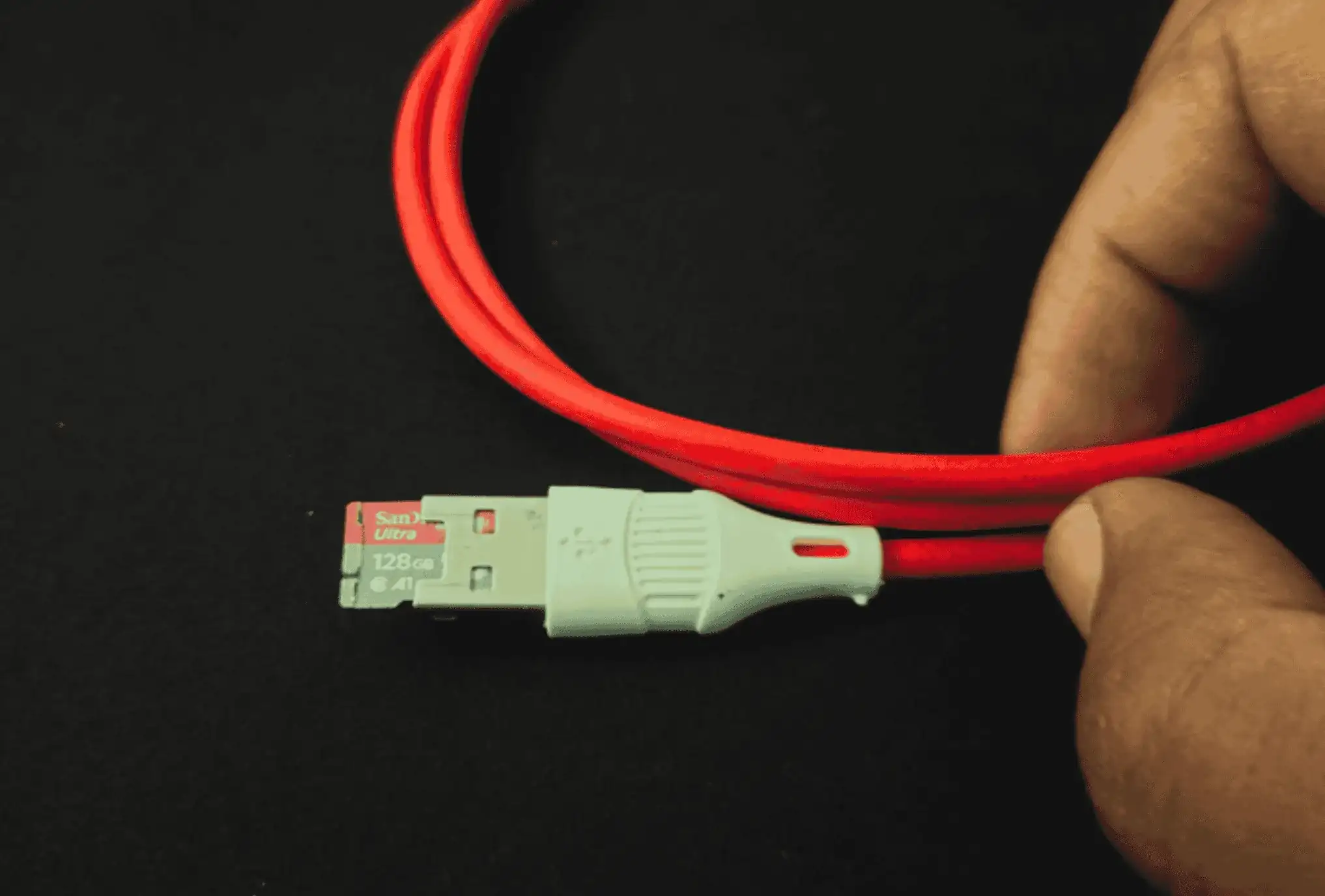
Red USB cable with hidden ESP32-S3 microcontroller and microSD slot inside connector

You're looking at Hacknect, an $82 USB cable that conceals an ESP32-S3 microcontroller inside its connector. What appears to be an ordinary charging cable actually contains Wi-Fi capabilities, a hidden microSD slot, and the ability to execute remote payloads through keystroke injection. The Kickstarter project has already surpassed its funding goal, raising over $38,000 from hundreds of backers.

The engineering is deliberately deceptive. Hacknect functions as a standard USB cable for data transfer and charging, but underneath it operates as a programmable interface controlled through a browser-based dashboard. It can simulate keystrokes and mouse inputs, trigger actions remotely via Wi-Fi, and even includes a self-destruct function that wipes all stored data on command. The creators positioned it as an open-source tool for "makers, developers, automation enthusiasts, and cybersecurity learners" โ€” though the implications extend far beyond educational use.

Image Credit: Hacknect Kickstarter Campaign

Read the Story View Kickstarter
Martin's Corner

Martin's Corner

Thanks for reading this month's issue of DevTech News.

If this is your first time here, consider subscribing to get notified at the start of every month when the newest issue drops. The subscription link is below (keep scrolling).

If you enjoyed the lead DevTech story this month about the state of AI in 2026 and you work with CSS at all, consider taking the state of CSS in 2026 survey.

โ†’ Take the State of CSS 2026 survey

Have a great month ahead, and I'll see you in July.